HVAC Insights January 16, 2025

HVAC Not Heating or Cooling? Here’s How to Diagnose and Fix It Fast

HVAC Not Heating or Cooling? Expert Troubleshooting Guide to Restore Comfort

There’s nothing quite like the sinking feeling when you adjust your thermostat, expecting comfort, and your HVAC system delivers… nothing. Whether it’s the dead of winter and your furnace won’t heat, or a sweltering summer day when your AC refuses to cool, a malfunctioning HVAC system disrupts your entire life.

Before you panic or search for “HVAC contractors near me,” take a breath. Many heating and cooling issues have surprisingly simple fixes you can handle yourself. This comprehensive guide walks you through expert-level troubleshooting steps to identify why your HVAC system isn’t heating or cooling properly—and when it’s time to call in professional air conditioner repair technicians.


Why Your HVAC System Stops Working: The Real Impact

When your heating, ventilating and air conditioning system fails, it’s more than just an inconvenience. Your home’s indoor air quality suffers, energy bills spike as the system struggles, and your family’s comfort hangs in the balance. According to the U.S. Department of Energy, common installation and maintenance problems—including incorrect refrigerant charge and leaky ducts—can significantly impair system efficiency .

Understanding the root causes empowers you to make informed decisions about AC maintenance and repairs, potentially saving hundreds on unnecessary service calls while ensuring you know when professional HVAC service is truly needed.


Quick Diagnostic Checklist: Start Here

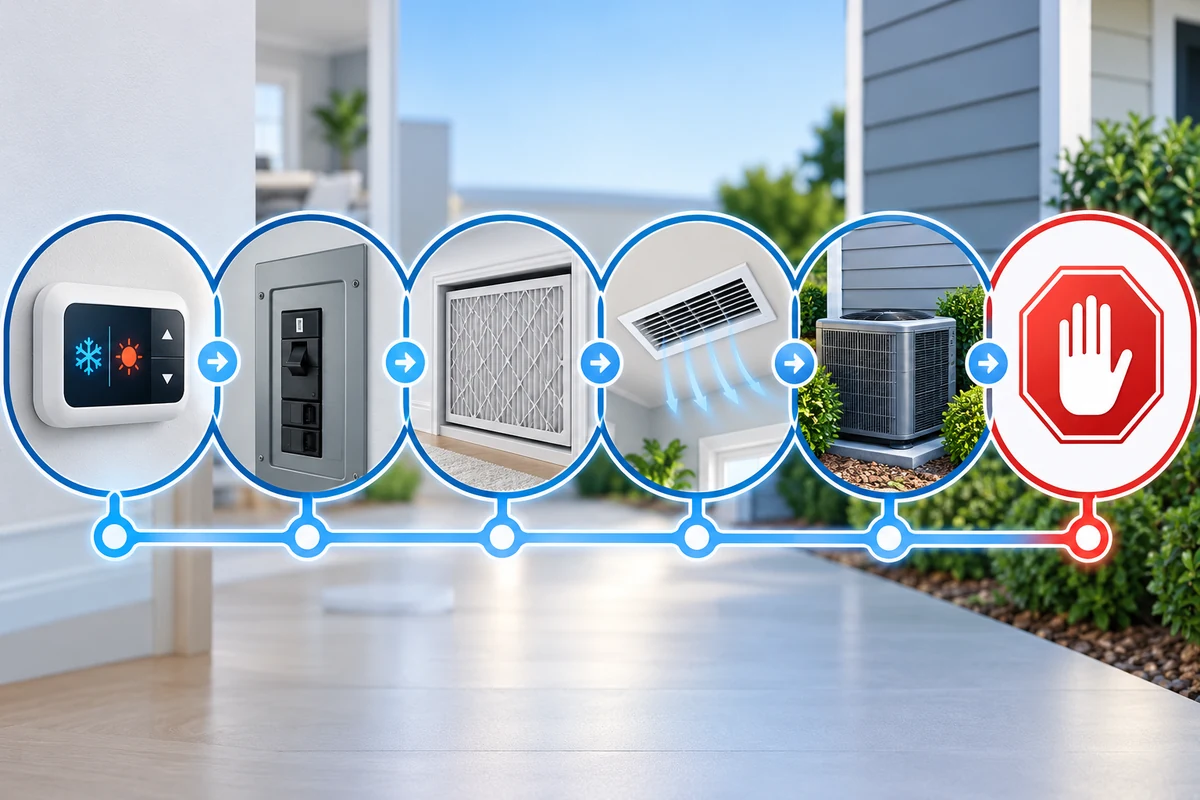
Before diving into detailed troubleshooting, run through this 60-second checklist:

  1. Check the thermostat – Is it set to the right mode (HEAT/COOL)? Are the batteries fresh?
  2. Inspect the circuit breaker – Has the breaker tripped to the OFF position?
  3. Verify power to the outdoor unit – Is the disconnect switch turned on?
  4. Look at your air filter – When was it last changed?
  5. Clear around outdoor units – Remove leaves, grass, and debris within 2 feet of the condenser

If these basics check out and you’re still experiencing issues, it’s time for deeper diagnostics.


Common Causes of Insufficient Heating or Cooling

1. Thermostat Malfunctions: The Brain of Your System

Your thermostat is the command center of your entire HVAC system. When it malfunctions, even a perfectly functional heating or cooling system can’t perform.

What to check:

  • Settings verification: Ensure the thermostat is set to HEAT during winter or COOL during summer, and that the temperature setting is appropriate for your comfort needs
  • Battery replacement: Dead batteries in programmable thermostats cause blank displays and communication failures—swap them out before assuming major system failure
  • Location issues: Thermostats placed near heat sources, direct sunlight, or drafty windows provide inaccurate readings, causing short-cycling or inadequate temperature control

If your thermostat ignores set temperatures or displays erratic behavior, it may need recalibration or replacement. Modern smart thermostats offer improved energy management and more precise control over your home service needs.


2. Dirty or Clogged Air Filters: The #1 Culprit

A clogged air filter is the most frequent—and most preventable—cause of HVAC performance issues. When filters become saturated with dust, dirt, and debris, they restrict airflow, forcing your system to work harder while delivering less comfort .

Signs of filter problems:

  • Weak airflow from vents
  • System running constantly without reaching set temperature
  • Frozen evaporator coils (in cooling mode)
  • Increased energy bills

The fix: Replace disposable filters every 1-3 months, depending on usage and household factors like pets or allergies. For washable filters, clean thoroughly monthly. This simple AC maintenance task prevents costly air conditioner repair calls and extends system lifespan .


3. Refrigerant Issues: When Your AC Can’t Cool

Refrigerant is the lifeblood of your air conditioning system. It absorbs heat from indoor air and releases it outside. When levels drop due to leaks, your AC runs continuously without effectively cooling your home .

Warning signs of refrigerant problems:

  • AC running but not lowering indoor temperature
  • Hissing sounds near refrigerant lines
  • Ice buildup on outdoor refrigerant lines
  • Higher than normal humidity levels indoors

Critical note: Refrigerant handling requires EPA certification. Never attempt DIY refrigerant charging—contact licensed HVAC companies to locate leaks, repair damaged lines, and recharge to manufacturer specifications .


4. Frozen Evaporator Coils: The Ice Problem

Evaporator coils absorb heat from your indoor air. When airflow is restricted—usually from dirty filters or blocked vents—or refrigerant levels are low, these coils can freeze over, completely blocking the cooling process .

Immediate action:

  1. Turn off the cooling system at the thermostat
  2. Switch the fan to ON to circulate air and speed thawing
  3. Check and replace the air filter
  4. Ensure all supply and return vents are open and unobstructed
  5. Wait several hours for complete thawing before restarting cooling

If coils freeze repeatedly, this indicates deeper issues requiring professional HVAC system repair, such as refrigerant leaks or blower motor problems .


5. Blocked or Leaky Ductwork: The Hidden Energy Thief

Your ductwork is the delivery system for conditioned air. When ducts leak or become blocked, heated or cooled air escapes before reaching your living spaces, creating uneven temperatures and wasted energy .

DIY inspection tips:

  • Walk your home and verify all vents are open and unblocked by furniture, rugs, or curtains
  • Feel for air leaks at duct connections in accessible areas like basements or attics
  • Look for disconnected duct runs or visible damage

Professional solution: HVAC contractors use specialized equipment to detect hidden leaks and can seal ductwork with mastic sealant or metal tape, improving efficiency by up to 20% .


6. Outdoor Condenser Unit Issues

Your outdoor condenser unit releases heat extracted from your home. When it’s compromised, your entire air conditioning system suffers.

Common outdoor unit problems:

  • Debris buildup: Grass clippings, leaves, and dirt clog condenser coils, reducing heat transfer efficiency
  • Overgrown vegetation: Shrubs and plants blocking airflow within 2 feet of the unit
  • Mechanical failures: Faulty condenser fan motors or capacitors prevent proper heat dissipation

Safe cleaning procedure:

  1. Turn off power at the disconnect box
  2. Clear debris from around the unit base
  3. Trim back vegetation to maintain 2-foot clearance
  4. Gently rinse coils with a garden hose on low pressure (never use high pressure or bend the delicate fins)

7. Electrical Component Failures

HVAC systems rely on several electrical components that can fail over time, particularly in older systems.

Capacitor issues: These small but crucial components provide the electrical jolt needed to start compressors and fan motors. A failing capacitor often causes short-cycling, delayed starts, or humming noises without system startup .

Circuit breaker problems: Tripped breakers protect your system from electrical overloads. While resetting a tripped breaker is safe, repeated tripping indicates serious electrical issues requiring immediate professional attention to prevent fire hazards .


8. Aging HVAC Systems: When Replacement Makes Sense

Even with diligent maintenance, HVAC systems have finite lifespans. Most systems last 15-20 years before efficiency drops significantly and repair costs escalate .

Signs your system may need replacement:

  • Frequent repairs exceeding 50% of replacement cost
  • Inability to maintain consistent temperatures
  • Excessive noise or vibration
  • Energy bills increasing despite unchanged usage patterns
  • System age exceeding 15 years

Modern energy-efficient systems can reduce utility costs by 20-40% while providing superior comfort and indoor air quality. Consult with heating and cooling contractors to evaluate whether AC installation or furnace replacement offers better long-term value than continued repairs.


Seasonal-Specific Troubleshooting

When Your Furnace Won’t Heat

Pilot light/ignition problems: Gas furnaces rely on pilot lights or electronic ignition systems. If the pilot won’t stay lit, the thermocouple may be faulty, or the pilot tube may be clogged—issues best handled by HVAC technicians .

Blower motor failures: If your furnace runs but blows cold air, the blower motor may be malfunctioning, or the high-limit switch may have tripped due to overheating .

Heat exchanger issues: Cracked heat exchangers pose serious safety risks, including carbon monoxide leaks. Annual inspections by qualified HVAC contractors are essential for safe operation.

When Your AC Won’t Cool

Compressor problems: The compressor is the heart of your AC system. If it fails due to electrical or mechanical issues, the system runs without producing cold air . Compressor repairs require professional diagnosis and are among the more significant AC repair investments.

Drainage issues: Clogged condensate drain lines trigger safety switches that shut down the system. Regular maintenance—including pouring boiling water down drain pipes monthly—prevents algae and debris buildup .


Preventive Maintenance: Your Best Defense

The most effective way to avoid emergency HVAC service calls is regular maintenance. Professional tune-ups twice yearly—before cooling season and before heating season—catch minor issues before they become major failures.

What professional HVAC maintenance includes:

  • Comprehensive system inspection and cleaning
  • Refrigerant level verification
  • Electrical connection tightening and testing
  • Blower motor and belt inspection
  • Thermostat calibration
  • Ductwork assessment
  • Safety control testing

Homeowner maintenance tasks:

  • Monthly filter checks and replacements
  • Keeping outdoor units clear of debris
  • Testing thermostat operation seasonally
  • Listening for unusual noises that indicate developing problems

FAQ: Your HVAC Questions Answered

Q: Why is my AC running but not cooling the house? A: The most common causes are dirty air filters restricting airflow, low refrigerant levels due to leaks, frozen evaporator coils, or a blocked outdoor condenser unit. Start by checking your filter and ensuring all vents are open .

Q: How often should I change my HVAC air filter? A: Replace 1-3 month filters every 30-90 days depending on usage, pets, and allergy concerns. Homes with multiple pets or high dust levels may need monthly changes. Washable filters should be cleaned monthly .

Q: Can I add refrigerant to my AC myself? A: No. Refrigerant is an EPA-controlled substance requiring certification to handle. Only licensed HVAC technicians can legally diagnose leaks, repair systems, and recharge refrigerant to proper levels .

Q: Why does my furnace blow cold air? A: This often indicates a dirty filter causing the system to overheat and trigger safety limits, a malfunctioning pilot light or ignition system, or a failed blower motor. Check your filter first, then call for professional furnace repair if the issue persists .

Q: How do I know if I need HVAC repair or replacement? A: Consider replacement if your system is over 15 years old, requires frequent repairs, cannot maintain consistent temperatures, or if repair costs exceed 50% of a new system’s price. New energy-efficient models offer significant long-term savings .

Q: What should I do if my HVAC system won’t turn on at all? A: Check the thermostat settings and batteries, verify the circuit breaker hasn’t tripped, ensure the outdoor disconnect switch is on, and inspect the air filter. If these steps don’t restore operation, contact an HVAC technician for diagnosis .

Q: How can I improve my HVAC system’s efficiency? A: Regular filter changes, annual professional maintenance, sealing duct leaks, adding insulation, installing a programmable thermostat, and keeping outdoor units clean all improve efficiency and reduce energy costs .


When to Call Professional HVAC Contractors

While DIY troubleshooting resolves many issues, certain situations demand professional expertise:

  • Refrigerant leaks or recharging needs
  • Electrical problems beyond breaker resets
  • Compressor or heat exchanger failures
  • Persistent system short-cycling
  • Unusual noises indicating mechanical failures
  • Systems exceeding 15 years with declining performance

Professional HVAC companies have the diagnostic tools, technical training, and safety certifications to handle complex repairs while protecting your warranty coverage.


Conclusion: Restore Your Comfort Today

A malfunctioning HVAC system disrupts your home’s comfort and peace of mind, but many heating and cooling issues have straightforward solutions. By methodically working through thermostat settings, air filters, power sources, and airflow obstructions, you can often restore comfort without a service call.

However, when DIY troubleshooting reaches its limits—or when safety-critical components like refrigerant systems or electrical connections are involved—trust qualified heating and cooling contractors to protect your investment and your family’s safety.

Don’t let HVAC problems linger. Whether you need emergency AC repair, routine maintenance, or system replacement consultation, professional help ensures your home stays comfortable year-round.

Ready to restore your comfort? Contact our expert HVAC technicians today for fast, reliable service that gets your heating and cooling system back to peak performance.

call