
What HVAC repair costs — and what affects the price
Why the same HVAC repair can cost very different amounts, and what actually drives the price.
Key points
- Compare the confirmed fault, included work and the terms in writing.
- Equipment age alone does not decide repair versus replacement.
- Ask how the repair will be checked and what happens if the symptom returns.
The price of a repair depends on the confirmed fault, the parts needed and the work required to put the system back into service. Use this guide to compare the scope of a quote and understand the options before approving work.
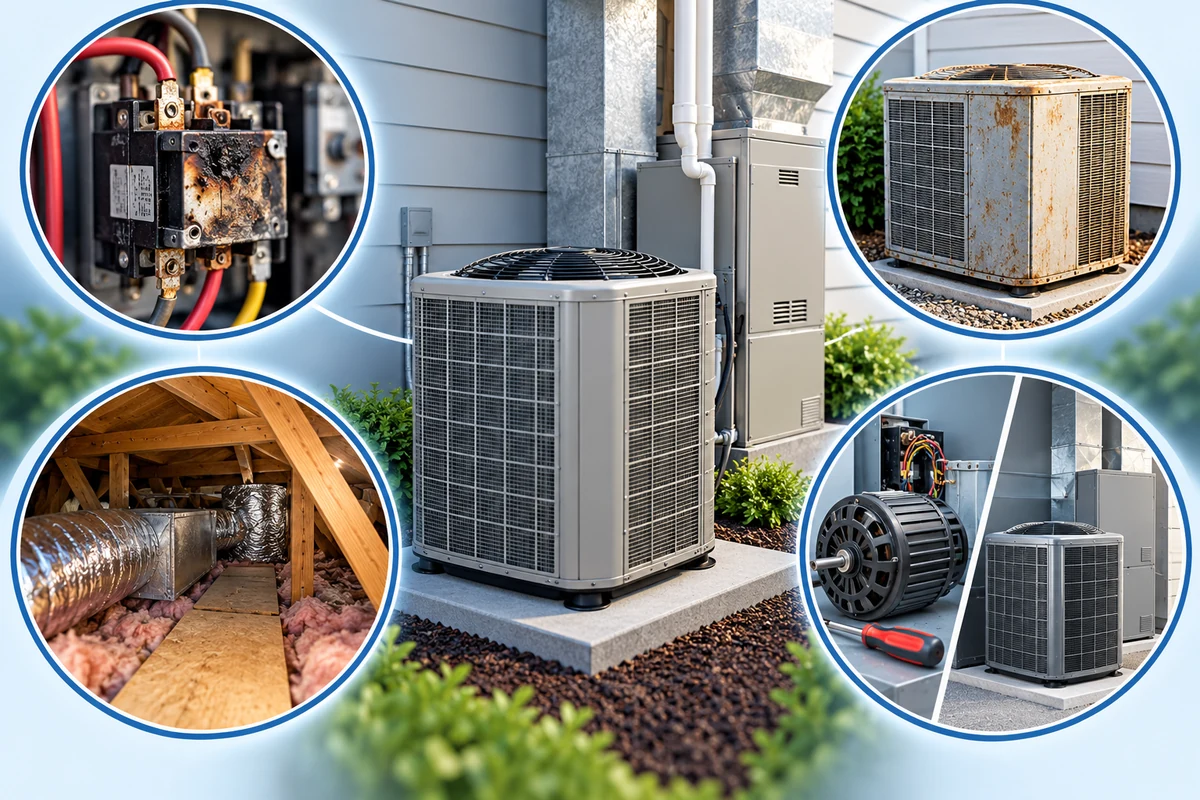
Four things to compare
1. The fault and the proposed repair
Ask which component failed, how the technician confirmed it and whether another problem contributed. The same symptom, such as warm air from the vents, can have different causes. A parts replacement, leak repair and airflow correction involve different work.
The quote should explain what the proposed repair is expected to solve. If diagnosis needs another visit or further investigation, ask what that involves and what you would pay.
2. Parts and equipment condition
The exact model and replacement-part availability affect the options. Brand and model can affect the price of a part; age alone does not tell you whether a repair is worthwhile.
Ask whether a part is covered, whether labor is covered separately, and what exclusions apply. Get the applicable terms in writing rather than assuming coverage extends to the entire job.
3. Access and associated work
A unit at ground level presents a different job from equipment on a roof or in a confined space. Removal, lifting, electrical work, venting and duct changes may add work. Ask which of these are included and which would need a separate quote.
4. What happens after the repair
Ask how the system will be checked after the work and what to do if the symptom returns. For an older system with repeated problems, compare the repair with a replacement option that includes installation and any necessary alterations.
Repair or replace?
There is no single component or age threshold that makes the decision for every home. Compare the repair cost, overall condition, recent repair history, comfort problems and the cost of a suitable replacement.
A repair may be reasonable when the rest of the equipment is sound. Replacement may deserve a closer look when substantial work is needed on a system with other unresolved problems. Ask for the reasons behind each recommendation and what remains uncertain.
The furnace and AC replacement-cost guide provides market context. Its published ranges are not a quote for your property.
Compare the same scope
Two quotes can differ because they include different parts, labor, access work or follow-up. Ask each contractor to explain the difference before comparing the totals. A low total with missing work is difficult to compare with a complete scope; a higher total alone does not prove better work.
Use the quote checklist and questions below during that conversation. Keep a copy of the approved scope and any later changes.
What maintenance can tell you
Maintenance can identify dirty components, drain problems or other developing faults. It cannot guarantee that a future repair will be inexpensive or prevent every breakdown. ENERGY STAR’s maintenance checklist describes the inspections commonly included in a professional visit.
What to share when requesting service
Describe the symptoms, when they started, any displayed fault code and the affected rooms. If available, share the equipment model and its approximate age. Those details help plan the visit; the assessment establishes the work needed.
Sources
- ENERGY STAR: Maintenance checklist · Checked October 2026
Need help with this?
All servicesOur services page lists every service and how to book it. We assess the system, explain what we found and provide a written quote for approval before work begins.