
Complete HVAC Guide: Heating, Cooling & Ventilation Explained
Is your home ever too hot in summer, freezing in winter, or stuffy year-round? You’re not alone. Millions of homeowners struggle with inconsistent temperatures, high energy bills, and poor air quality—often without understanding the one system that controls it all: HVAC.
Heating, Ventilation, and Air Conditioning isn’t just about luxury. It’s about your family’s health, your home’s safety, and your monthly budget. A well-functioning HVAC system removes allergens, prevents mold growth, stops carbon monoxide risks, and cuts energy waste.
Whether you’re buying your first furnace, troubleshooting a noisy AC, or simply wanting lower utility bills, this guide walks you through everything that matters. No confusing jargon. No fluff. Just clear, practical answers.
Let’s start with the basics—then dive into what keeps your home perfectly comfortable, safely, and efficiently.
What Exactly Is HVAC? (And Why the “V” Matters Most)
HVAC stands for Heating, Ventilation, and Air Conditioning. Some pros add an “R” for Refrigeration, but the core three functions remain the same:
- Heating keeps you warm when outdoor temperatures drop.
- Cooling removes heat and humidity during sweltering months.
- Ventilation exchanges stale indoor air with fresh outdoor air—this is the most overlooked yet critical part.
Without proper ventilation, pollutants like dust, carbon dioxide, cleaning fumes, and even viruses accumulate. That “stuffy” feeling? That’s your home begging for fresh air.
Modern HVAC systems balance these three jobs automatically. But to truly appreciate what they do, you need to peek inside.
Key Components of Every HVAC System (What Makes Them Work)
1. Heating Systems: Furnaces, Boilers, and Heat Pumps
Your heating source depends on your home’s design and climate:
- Furnaces burn natural gas, oil, or use electric coils to warm air, then push it through ducts. Most common in colder regions.
- Boilers heat water instead of air, sending steam or hot water to radiators or floor tubing (called hydronic heating).
- Heat pumps work like reversible air conditioners—they pull heat from outside air or the ground, even in winter. Extremely energy-efficient.
All three methods transfer heat through convection (moving air or water), conduction (direct contact with radiators), or radiation (infrared warmth).
2. Ventilation Systems: Mechanical vs. Natural
Ventilation falls into two categories:
- Mechanical (forced) ventilation uses fans, ducts, and air handlers to actively push stale air out and pull fresh air in. Bathroom exhaust fans and kitchen range hoods are examples.
- Natural ventilation relies on windows, vents, and building design. Great for mild climates but unreliable in extreme weather or tightly sealed modern homes.
The gold standard? Balanced mechanical ventilation with heat recovery (HRV) or energy recovery (ERV). These systems capture heat from outgoing air to precondition incoming fresh air, slashing energy waste.
3. Air Conditioning: How Cooling Really Works
Air conditioners don’t create cold—they remove heat. Using a refrigerant, compressor, and evaporator coils, they absorb indoor heat and release it outside.
Common AC types include:
- Central AC – One unit cools the whole house via ducts.
- Ductless mini-splits – Perfect for older homes or room additions.
- Portable or window units – Temporary or single-room solutions.
All ACs also dehumidify, which is why you see water dripping from them on humid days.
How an HVAC System Works Together (Step-by-Step)
Here’s what happens when your thermostat calls for comfort:
- Thermostat senses the temperature has dropped below your setting.
- Heating or cooling activates – Gas valves open, compressors start, or heat pumps reverse.
- Air handler or blower fan pulls room air through return ducts.
- Air passes over heat exchanger or evaporator coil – warmed or cooled.
- Conditioned air flows through supply ducts into each room.
- Ventilation system continuously exchanges a portion of indoor air with filtered outdoor air.
- Thermostat turns off once desired temperature is reached.
This cycle repeats throughout the day, maintaining comfort while the ventilation runs independently to keep air fresh.
The Hidden Dangers of a Neglected HVAC System
Ignoring regular HVAC maintenance isn’t just uncomfortable—it’s dangerous:
- Carbon monoxide poisoning – Cracked heat exchangers in gas furnaces can leak this odorless killer. Annual inspections save lives.
- Mold and bacteria growth – Dirty AC coils and clogged drain lines breed allergens that spread through your ducts.
- Poor air quality – Dust, pollen, and volatile organic compounds (VOCs) accumulate without proper ventilation, triggering asthma and headaches.
- Energy waste – A dirty filter or low refrigerant makes your system run 20–50% longer, spiking bills.
The solution is simple: professional tune-ups twice a year (before heating season and before cooling season), plus monthly filter checks.
HVAC and Disease Prevention: What COVID Taught Us
The pandemic highlighted what experts have known for decades: ventilation saves lives. Proper airflow dilutes and removes airborne pathogens, including flu, colds, and COVID-19.
Key strategies include:
- Increasing outdoor air percentage in your HVAC mix.
- Upgrading filters to MERV 13 or higher.
- Installing UVC lights inside air handlers to sterilize microorganisms.
Even simple steps like running your fan continuously (not just on “auto”) improve air mixing and filtration.
The Future of HVAC: Smart, Green, and Efficient
Today’s HVAC systems are light-years ahead of those from just 10 years ago. Expect to see:
- Smart thermostats that learn your schedule and adjust for savings.
- Geothermal heat pumps using stable underground temperatures (up to 400% efficient).
- Solar-assisted HVAC with integrated photovoltaic panels.
- AI-powered diagnostics that predict failures before they happen.
- Low-GWP refrigerants with near-zero environmental impact.
These innovations mean lower bills, smaller carbon footprints, and fewer repair headaches.
Common HVAC Questions Answered (Your Quick Troubleshooting Guide)
Why is one room always hotter/colder than the rest? Likely a duct balancing issue, undersized return air, or poor insulation. A professional can test static pressure and adjust dampers.
How often should I change my air filter? Standard 1-inch filters: every 30–90 days. Thicker 4-inch media filters: every 6–12 months. Change immediately if you have pets, smokers, or recent construction.
My AC runs constantly but doesn’t cool well. What’s wrong? Common causes: low refrigerant (leak), dirty outdoor coil, failing compressor, or undersized system. Call a pro—don’t keep running it.
Should I repair or replace a 12-year-old furnace? Apply rule: If the repair costs more than 20% of a new system’s price and the unit is past half its expected life (15–20 years for furnaces), replace it.
What’s the most energy-efficient HVAC system? Ductless mini-split heat pumps, especially cold-climate models. They eliminate duct losses (up to 30% of energy waste) and provide zoned control.
FAQs: Your Top HVAC Questions Answered
1. What size HVAC system do I need for my home?
Proper sizing is critical. Technicians perform a Manual J load calculation that considers square footage, insulation, window area, climate, and occupancy. Bigger isn’t better—oversized systems short-cycle, waste energy, and fail to dehumidify.
2. Why does my HVAC system make loud noises?
- Banging – Loose or broken connecting rod in compressor.
- Squealing – Worn blower motor belt or bearings.
- Clicking – Failing ignition or relay.
- Hissing – Refrigerant leak. Turn off the system and call a professional immediately for hissing or banging.
3. How long do HVAC systems typically last?
With regular maintenance:
- Furnaces: 15–20 years
- Central AC: 10–15 years
- Heat pumps: 10–15 years
- Boilers: 20–30 years
- Ductwork: 30+ years if sealed and insulated
4. What’s the difference between SEER, AFUE, and HSPF?
- SEER (Seasonal Energy Efficiency Ratio) – Cooling efficiency. Higher = cheaper to run. Current minimum is 14–15 SEER.
- AFUE (Annual Fuel Utilization Efficiency) – Furnace efficiency. 80% means 20% of fuel goes up the flue. 96%+ is premium.
- HSPF (Heating Seasonal Performance Factor) – Heat pump heating efficiency. 8+ HSPF is good; 10+ is excellent.
5. Can I install an HVAC system myself?
No. DIY installation risks carbon monoxide leaks, refrigerant venting (illegal), electrical fires, and voided warranties. Always use licensed, insured professionals.
6. How do I know if my ducts need cleaning?
Professional duct cleaning is rarely needed unless you see mold growth, have vermin infestation, or notice debris blowing from registers. Skip the scammers offering.
7. What is a heat pump vs. a furnace?
A furnace burns fuel or uses electric resistance to create heat. A heat pump moves existing heat from outdoors inside. Heat pumps are 2–4x more efficient but provide less intense heat in extreme cold. Many homes use a hybrid: heat pump for mild weather, furnace backup for deep freeze.
Call To Action
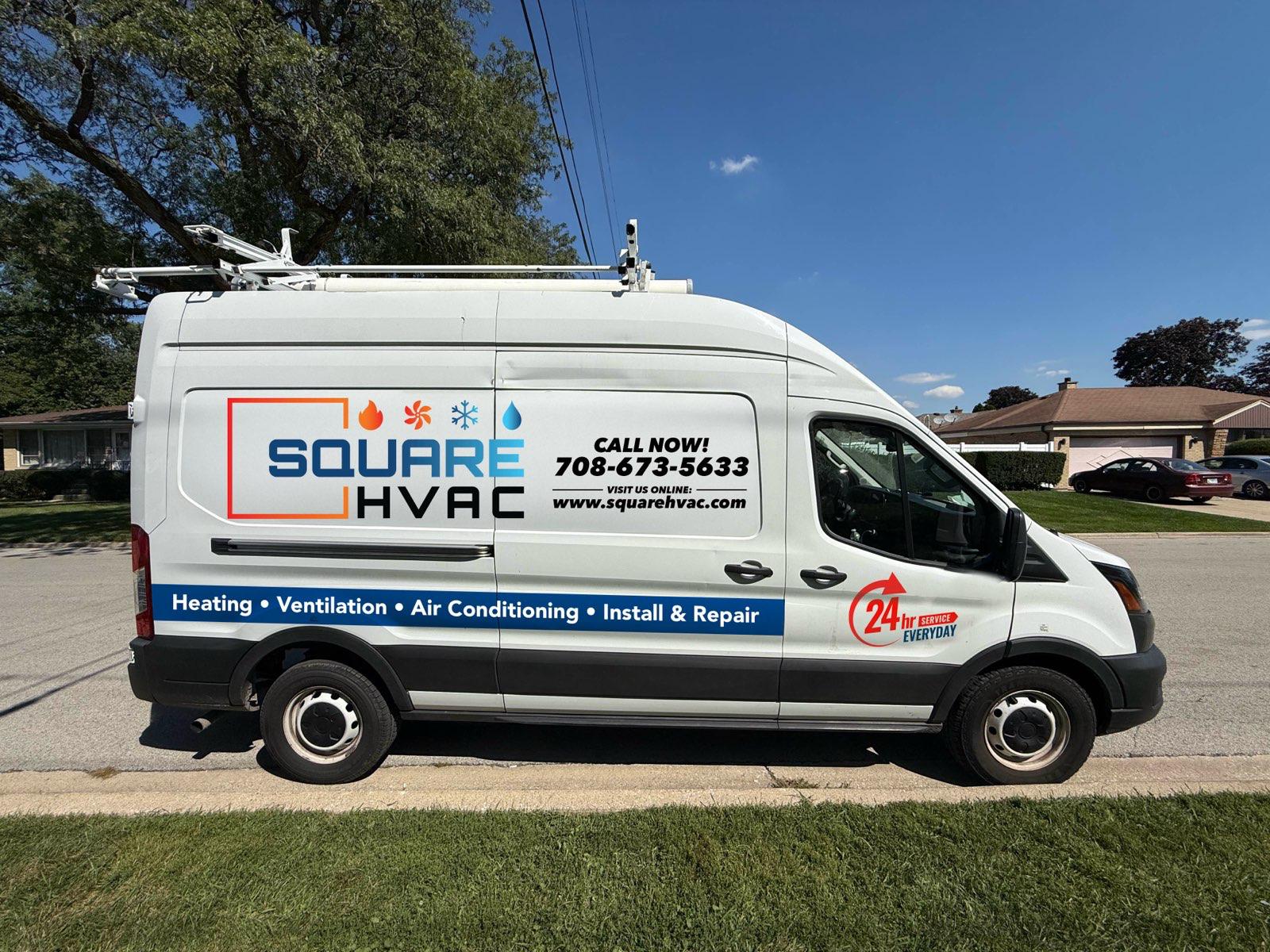
Don’t let another season of discomfort or sky-high energy bills pass you by. Whether you need emergency repair, a planned replacement, or simply want to understand your current system better, Square HVAC is here to help.
Our licensed technicians provide: ✅ Same-day service for most issues ✅ Transparent, upfront pricing with no hidden fees ✅ 100% satisfaction guarantee on all work ✅ Free second opinions on any repair quote
📞 Call us now at (708) 123-4567 for a free phone consultation, or click here to schedule online. Your comfort and safety are just one call away.
Serving Hillside, IL and surrounding communities with pride for over 15 years.