
Water Heater Types: How to Choose One
Tank, tankless, heat pump, solar and condensing gas: how each water heater works, and the questions to ask before choosing one for a home or building.
Key points
- Match the machine to the building: fuel, simultaneous draws, space and rates.
- Follow the manufacturer's maintenance schedule and leave safety devices to a technician.
- Treat water around the base as a stop-and-call moment.
When a water heater fails, the replacement question is rarely “which one is best” and usually “which one fits this building.” This guide describes the main types, how each works, and the questions that decide the choice.
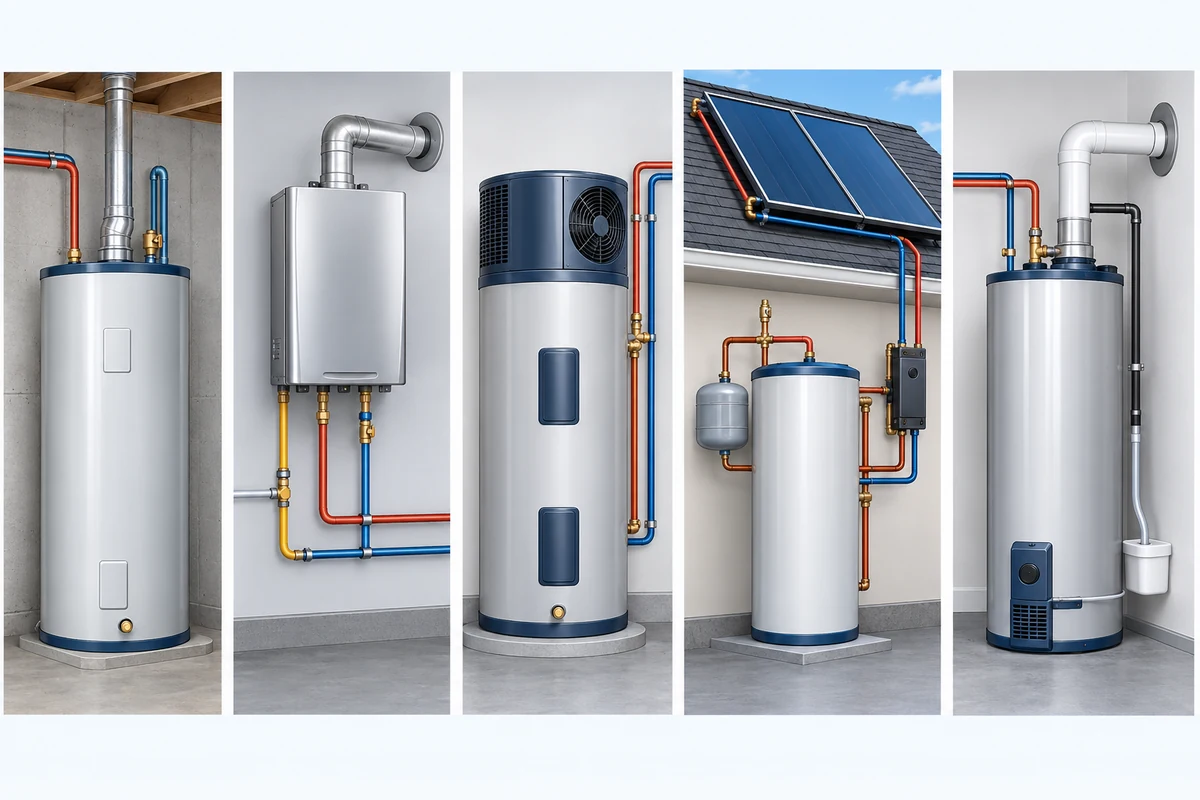
The main types
1. Tank (storage) water heaters
The classic setup: an insulated tank holds hot water ready for use, and the equipment reheats as it is drawn.
- How it works: cold water enters the bottom of the tank, gas burners or electric elements heat it, and hot water leaves from the top when a faucet opens.
- Fits well: households with steady needs, straightforward replacements and limited budgets.
- Watch for: the tank holding heat all day even when nobody draws water, and hot water eventually running out during heavy use.
2. Tankless (on-demand) water heaters
No stored water: the unit heats water as it flows through on its way to the faucet.
- How it works: opening a hot-water faucet starts the burners or elements, and the water is heated across a heat exchanger inside the unit.
- Fits well: small households who want the space back, and replacements where a unit can be vented or wired as it requires.
- Watch for: the unit sizing against how much hot water is drawn at once (multiple showers at the same moment), and the higher first cost of the unit and its venting.
3. Heat pump (hybrid) water heaters
A heat pump water heater moves warmth from the surrounding air into the tank instead of generating the heat directly.
- How it works: the unit pulls in room air, extracts its heat into the water, and releases cooler air. It uses less electricity than resistance heating for the same hot water.
- Fits well: rooms with enough surrounding air volume and a temperature range the unit is designed for, such as basements and garages.
- Watch for: the surrounding space the manufacturer requires, and the slower recovery after heavy use.
4. Solar water heaters
A roof collector heats water (usually with a backup heater for cloudy stretches).
- Fits well: properties with the roof orientation, the space for a storage tank and an owner who wants the renewable route.
- Watch for: the balance between collector, tank and backup heater has to be designed, not improvised, and weather matters.
5. Condensing gas water heaters
A high-efficiency gas unit that recovers heat from its own exhaust instead of sending it up the flue.
- Fits well: gas households with high hot-water use, where the venting requirement can be met.
- Watch for: the special venting and condensate drain the design needs.
Sources
- Rheem: Water-heating product education · Checked October 2026
- ENERGY STAR: Heat pump water heaters · Checked October 2026
Need help with this?
Hot Water HeatersOur hot water heaters page describes the work and how to book it. We assess the system, explain what we found and provide a written quote for approval before work begins.


