
Boiler Design, Working Principle, Types, Applications & Safety Guide
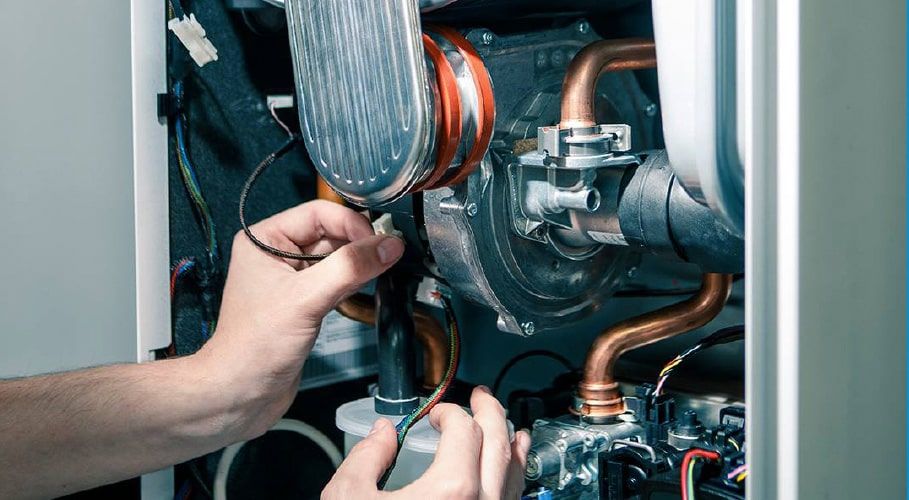
Is your heating system struggling to keep up? Understanding how boilers work can save you thousands in energy costs and prevent costly breakdowns.
A boiler is one of the most critical pieces of equipment in homes, commercial buildings, and industrial facilities across Hillside, IL and beyond. Whether you’re heating a family home, powering a manufacturing plant, or managing a hospital’s sterilization systems, the right boiler makes all the difference.
This comprehensive guide breaks down everything you need to know about boiler systems—from fundamental working principles to advanced safety protocols. By the end, you’ll understand which boiler type fits your needs and how to keep it running efficiently for years to come.
How Boilers Actually Work: The Science Behind Steam and Heat
The Heat Transfer Process Explained
At its core, a boiler is a sophisticated heat exchanger. Here’s what happens inside that metal shell:
- Fuel combustion – Natural gas, oil, electricity, or biomass ignites in the burner or furnace
- Heat generation – Flames and hot gases reach temperatures exceeding 1,000°F
- Water heating – Heat transfers through metal tubes or surfaces to the water inside
- Phase change – Water reaches 212°F (at sea level) and transforms into steam
- Steam distribution – Pressurized steam travels through pipes to radiators, turbines, or process equipment
- Condensate return – Cooled steam condenses back to water and cycles back to the boiler
This closed-loop system maximizes energy efficiency while minimizing water waste—a win for both your utility bills and the environment.
Why Pressure Matters
Boilers operate under pressure to achieve higher temperatures. For every pound of pressure (psi), water’s boiling point increases approximately 3°F. High-pressure boilers can generate superheated steam reaching 600°F or more, essential for power generation and industrial processes.
Essential Boiler Components: What Makes the System Tick
Understanding your boiler’s anatomy helps you communicate with technicians and spot potential issues early:
| Component | Function | Why It Matters |
|---|---|---|
| Burner/Furnace | Ignites fuel and generates heat | Determines efficiency and emission levels |
| Heat Exchanger | Transfers heat to water | Primary wear component—keep it clean |
| Steam Drum | Separates steam from water | Ensures dry steam delivery |
| Safety Valve | Releases excess pressure | Prevents catastrophic failures |
| Feedwater Pump | Maintains water levels | Critical for safe operation |
| Economizer | Recovers waste heat | Can improve efficiency by 5-10% |
| Control System | Regulates fuel, air, and water | Modern smart controls optimize performance |
Pro tip: Regular inspection of these components prevents 90% of boiler emergencies. Schedule a professional inspection with Square HVAC to catch issues before they become expensive problems.
Boiler Types: Finding Your Perfect Match
Fire-Tube Boilers: Simple and Reliable
Best for: Small commercial buildings, residential complexes, low-pressure heating
Fire-tube boilers channel hot combustion gases through tubes submerged in water. Think of it as a giant kettle with internal heating elements.
Advantages:
- Lower upfront cost
- Simple operation—minimal training required
- Compact footprint
- Easy maintenance access
Limitations:
- Maximum pressure around 250 psi
- Slower steam production
- Lower efficiency (80-85% typical)
Water-Tube Boilers: Power and Performance
Best for: Power plants, large industrial facilities, high-pressure applications
In water-tube designs, water circulates through tubes while hot gases flow around them. This configuration handles extreme pressures up to 3,000 psi.
Advantages:
- Rapid steam generation (minutes vs. hours)
- Handles high pressure and temperature
- Superior efficiency (90%+ achievable)
- Safer failure modes (small tube leaks vs. catastrophic shell rupture)
Limitations:
- Higher initial investment
- Requires skilled operators
- More complex maintenance
Electric Boilers: Clean and Quiet
Best for: Areas with low electricity costs, zero-emission requirements, backup heating
Electric boilers use resistance heating elements instead of combustion—no chimney, no emissions, no fuel storage.
Key considerations:
- 100% efficient at point of use (every kWh becomes heat)
- Operating costs depend entirely on local electricity rates
- Ideal for Hillside, IL homes with solar panels or green energy contracts
- Zero on-site carbon footprint
Gas and Oil Boilers: The Workhorses
Best for: Most residential and commercial applications
Natural gas boilers dominate the market for good reason—clean combustion, instant ignition, and excellent efficiency ratings (up to 95% for condensing models).
Oil boilers serve areas without natural gas infrastructure. While fuel costs fluctuate, modern oil burners achieve 85-90% efficiency with proper maintenance.
Biomass Boilers: The Sustainable Choice
Best for: Agricultural operations, eco-conscious facilities, waste-to-energy projects
Wood pellets, agricultural waste, and dedicated energy crops power these renewable systems. Modern biomass boilers feature automated feeding systems and emission controls that rival fossil fuel cleanliness.
Environmental impact: Carbon-neutral operation (plants absorb CO2 as they grow, releasing it when burned) makes biomass attractive for sustainability goals.
Maximizing Boiler Efficiency: Cut Costs Without Cutting Comfort
The Efficiency Equation
Boiler efficiency = (Useful heat output ÷ Total fuel energy input) × 100
Top-performing systems hit 95%+ efficiency. Older boilers might struggle to reach 70%. That 25% difference translates to thousands in annual savings for commercial facilities.
Practical Efficiency Boosters
Immediate actions:
- Lower your water temperature setting (every 10°F reduction saves 3-5% energy)
- Install programmable controls that match heating to occupancy
- Bleed radiators to remove air pockets
- Insulate steam pipes and valves
Professional upgrades:
- Add an economizer to capture exhaust heat
- Install variable frequency drives on pumps and fans
- Upgrade to condensing technology (recovers latent heat from water vapor)
- Implement smart controls with remote monitoring
Warning Signs of Declining Efficiency
- Rising fuel bills without increased usage
- Longer heating cycles to reach set temperatures
- Yellow or flickering burner flames (should be blue)
- Unusual noises or odors
- Frequent pressure relief valve discharges
Notice these symptoms? Contact Square HVAC for a comprehensive efficiency audit. Our technicians serving Hillside, IL and surrounding areas can restore peak performance.
Boiler Applications: Where Heat Powers Progress
Residential and Commercial Heating
Boilers remain the gold standard for hydronic heating systems. Radiant floor heating, baseboard radiators, and fan coil units all rely on hot water or steam distribution. Benefits include:
- Even, draft-free warmth
- Quiet operation
- Zoned temperature control
- Long equipment lifespan (20-30 years with maintenance)
Industrial Power Generation
Steam turbines drive generators producing 65% of global electricity. High-pressure boilers feed these massive turbines, with some plants generating 1,000+ megawatts.
Manufacturing and Processing
Chemical plants, refineries, food processors, and textile mills depend on process steam for:
- Distillation and separation
- Sterilization and pasteurization
- Drying and curing
- Chemical reactions requiring precise temperatures
Healthcare and Sterilization
Hospitals require reliable steam for autoclaves, humidification, and building heat. Redundant boiler systems ensure zero downtime for critical care facilities.
Marine and Transportation
Ships use boilers for propulsion (steam turbines) and auxiliary power. Locomotive boilers historically drove railroads, though diesel and electric have largely replaced steam traction.
Boiler Safety: Non-Negotiable Protection
Understanding the Risks
High-pressure vessels contain enormous stored energy. A catastrophic boiler failure releases superheated steam and water instantly—capable of destroying buildings and causing fatalities. Fortunately, modern safety systems and regulations make such incidents extremely rare.
Critical Safety Systems
Safety valves – Automatically release pressure if it exceeds safe limits (typically set 10% above operating pressure)
Low-water cutoffs – Shut down the burner if water levels drop dangerously low, preventing overheating and potential explosions
Pressure controls – Maintain operating pressure within safe ranges
Flame safeguards – Monitor combustion and shut off fuel if flames extinguish unexpectedly
Essential Maintenance Protocols
Daily checks:
- Water level verification
- Pressure gauge readings
- Fuel supply monitoring
- Unusual noise or vibration inspection
Monthly tasks:
- Safety valve testing
- Blowdown procedures to remove sediment
- Combustion analysis
- Control system verification
Annual requirements:
- Professional inspection by certified technicians
- Internal examination for scale and corrosion
- Safety valve calibration and certification
- Efficiency testing and tuning
Water treatment is non-negotiable. Untreated water causes scale buildup (reducing heat transfer), corrosion (weakening metal), and foaming (causing carryover). Professional water treatment programs pay for themselves through extended equipment life and maintained efficiency.
Emergency Procedures Every Operator Should Know
- High-pressure alarm – Reduce firing rate, check safety valve operation, prepare for controlled shutdown
- Low-water condition – Never add water to a hot, empty boiler (thermal shock can crack components)
- Fuel leak – Shut off supply valves, evacuate area, eliminate ignition sources
- Uncontrolled heating – Activate emergency shutdown, evacuate personnel, contact emergency services
Environmental Considerations: Heating Responsibly
Emissions and Air Quality
Traditional fossil fuel boilers produce:
- CO2 – Primary greenhouse gas contributing to climate change
- NOx – Nitrogen oxides causing smog and respiratory issues
- SO2 – Sulfur dioxide from high-sulfur fuels
- Particulates – Solid particles affecting air quality
Cleaner Solutions Available
Condensing boilers – Extract additional heat from exhaust gases, achieving 95%+ efficiency while reducing fuel consumption and emissions proportionally.
Low-NOx burners – Optimize combustion to minimize nitrogen oxide formation, often required by air quality regulations in urban areas like Chicago and surrounding suburbs.
Electrification – Grid-powered boilers eliminate on-site emissions entirely, particularly beneficial as renewable energy expands.
Hydrogen-ready boilers – Next-generation equipment designed to burn hydrogen (zero-carbon fuel) as infrastructure develops.
Future Trends: Smart Boilers and Beyond
Digital Transformation
Modern boilers feature:
- IoT sensors monitoring temperature, pressure, flow, and combustion parameters in real-time
- Predictive maintenance algorithms identifying wear patterns before failures occur
- Remote monitoring allowing technicians to diagnose issues without site visits
- Integration with building automation systems optimizing energy use across HVAC, lighting, and plug loads
Emerging Technologies
Hydrogen combustion – Pilot projects demonstrate 100% hydrogen-fired boilers. As green hydrogen production scales, this could eliminate heating-related carbon emissions.
Heat pumps – While not boilers, air-source and ground-source heat pumps increasingly compete for space heating, particularly in moderate climates.
Waste heat recovery – Industrial facilities capture heat from processes (ovens, furnaces, compressors) to pre-heat boiler feedwater, achieving circular energy use.
FAQs: Your Boiler Questions Answered
How long does a boiler typically last?
With proper maintenance, cast iron boilers last 20-30 years, while steel water-tube boilers may operate 15-25 years. Neglected systems often fail in 10-15 years. Annual professional service is the single best investment in longevity.
What’s the difference between a boiler and a furnace?
Boilers heat water or generate steam distributed through pipes to radiators or radiant floors. Furnaces heat air blown through ductwork. Boilers offer more even heat, better air quality (no dust circulation), and quieter operation.
How often should I service my boiler?
Residential systems need annual inspection and cleaning. Commercial and industrial boilers require more frequent attention—quarterly or monthly depending on operating hours and local regulations.
Why is my boiler making banging noises?
“Kettling” usually indicates scale buildup on heat exchangers causing localized boiling and steam bubble collapse. Other causes include trapped air, failing pumps, or incorrect pressure. Schedule service promptly to prevent damage.
Can I switch from oil to natural gas?
Usually yes, if natural gas service is available at your property. Conversion requires burner replacement, gas line installation, and chimney/venting modifications. Many homeowners recoup conversion costs within 3-5 years through lower fuel prices.
What temperature should my boiler be set at?
For hot water heating systems, 140-180°F is typical. Steam systems operate at various pressures corresponding to 215-250°F. Condensing boilers achieve maximum efficiency with lower return water temperatures (below 130°F).
Is a high-efficiency boiler worth the extra cost?
For most homeowners, yes. The 10-15% efficiency premium over standard models typically pays for itself within 5-8 years through reduced fuel bills. High-efficiency units also qualify for utility rebates and tax incentives in many areas.
What causes boiler pressure to drop?
Common culprits include water leaks (check valves, pumps, and piping), faulty pressure relief valves, or expansion tank issues. Small pressure drops over months may be normal, but rapid loss requires immediate professional attention.
Do I need a water softener with my boiler?
If your water hardness exceeds 7 grains per gallon (120 ppm), yes. Hard water causes scale that reduces efficiency 2-3% annually and can block flow entirely. Professional water analysis determines the right treatment approach.
When should I replace rather than repair my boiler?
Consider replacement when repair costs exceed 30% of replacement value, the unit is over 15 years old, efficiency has declined significantly, or parts availability becomes problematic. New high-efficiency models offer compelling operating cost savings.
Ready for Expert Boiler Service?
Understanding your boiler is just the beginning. Whether you need emergency repairs, routine maintenance, or a complete system upgrade, Square HVAC delivers professional service you can trust.
Why choose Square HVAC?
- 24/7 emergency response for critical failures
- Certified technicians trained on all boiler types
- Transparent pricing with no hidden fees
- Service throughout Hillside, IL and surrounding communities
- Maintenance plans that extend equipment life and prevent surprises
Don’t let boiler problems leave you in the cold. Contact Square HVAC today or call our emergency line for immediate assistance. Your comfort and safety are our top priorities.
Need help with other HVAC systems? Explore our complete HVAC services including AC repair, furnace installation, and indoor air quality solutions.