HVAC Insights January 28, 2024

AC Maintenance: The Complete Homeowner’s Guide (2026)

AC Maintenance: The Complete Homeowner's Guide (2026) | Square HVAC

Why AC Maintenance Matters

Your air conditioner works hardest on the hottest days. But if you only think about it when it stops working, you have already lost the battle. Regular AC maintenance is the single most effective way to prevent breakdowns, lower your energy bills, and extend the life of your system.

Most homeowners don’t realize how much neglect costs them. An unmaintained AC loses efficiency every year. Dirt on the condenser coils, a clogged air filter, and low refrigerant all force the system to run longer to cool your home. That extra runtime shows up directly on your electric bill.

Energy savings from regular maintenance depend on your system’s condition and local electricity rates. However, studies from the U.S. Department of Energy consistently show that a well‑maintained AC uses significantly less energy than one that has been ignored for years.

Lifespan Difference

Maintenance LevelAverage AC Lifespan
No maintenance10–12 years
Annual maintenance15–20 years

That difference alone can save you the cost of a full replacement — often a five‑figure expense.

Reliability Factor

The most common AC breakdowns — failed run capacitors, dirty filters, low refrigerant charge, and clogged condensate drains — are almost all preventable with regular maintenance. A proper tune‑up catches these problems while they are still cheap to fix, not at 8 PM on a July 4th weekend when every service company is backed up for days.


Two Levels of AC Maintenance

There is a clear difference between what you can do yourself and what requires a professional. Do both.

Level 1: Homeowner DIY Maintenance (Every 1–3 Months)

These tasks require no special tools and take only minutes.

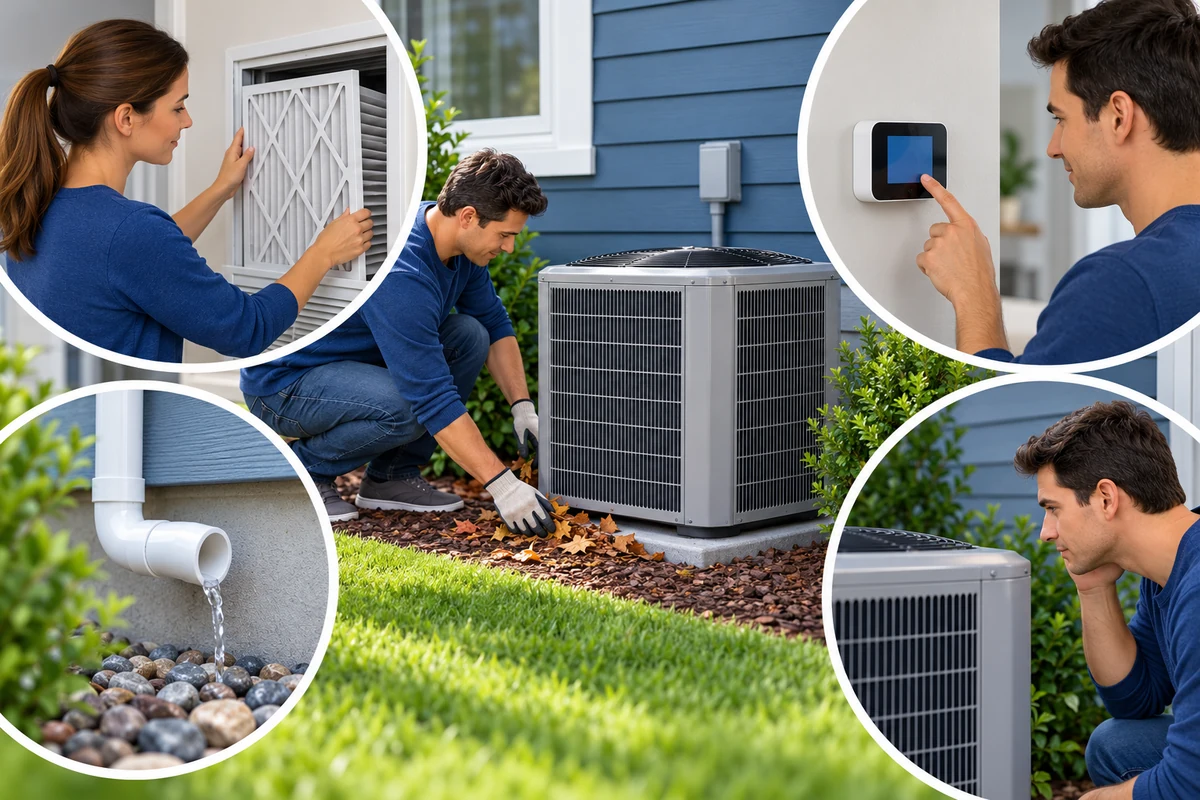
1. Change or Clean Your Air Filter

This is the single most important task. A dirty filter restricts airflow, causing the evaporator coil to freeze into a block of ice. That ice blocks cooling, and when it melts, it can flood your furnace or air handler.

Frequency: Every 1–3 months depending on filter type, pet ownership, and dust levels.

Steps:

  • Turn off the AC at the thermostat.
  • Locate the filter (return grille or furnace/air handler cabinet).
  • Note the size printed on the old filter.
  • Install a new filter with the airflow arrow pointing toward the unit.

Pro tip: Set a monthly calendar reminder and buy filters in bulk.

2. Clear the Area Around the Outdoor Unit (Condenser)

The outdoor unit needs plenty of airflow to release heat. Anything blocking that airflow makes your AC work harder.

  • Remove leaves, grass clippings, weeds, and debris from the unit’s fins.
  • Trim bushes so there is at least 2 feet of clearance on all sides.
  • Remove any winter covers — the unit is weather‑proof.

Avoid: Using a high‑pressure garden hose or pressure washer on the fins — it will bend them flat.

3. Check the Condensate Drain Line

Your AC removes humidity, producing water that exits through a PVC drain line.

Signs of a clog: Water pooling around the indoor unit, musty odors, or the AC shutting off prematurely (safety float switch engaged).

DIY fix: Pour one cup of white vinegar or a specialized condensate line cleaner down the drain opening near the indoor unit every spring.

4. Listen for Unusual Noises

Learn what your AC sounds like normally. Investigate any changes:

Noise TypeLikely Problem
Squealing / screechingFailing fan motor or blower motor bearings
Banging / clankingLoose component or damaged fan blade
HissingPossible refrigerant leak — call a pro
Continuous clickingStuck relay or contactor

5. Check the Thermostat

Ensure the thermostat is set to “COOL” and the setpoint is lower than the current room temperature. For programmable or smart models, verify the summer schedule is correct.

Level 2: Professional AC Tune‑Up (Annually)

Once per year — ideally in early spring before the first 90°F day — hire a licensed HVAC technician for a complete maintenance visit. Here is what a quality tune‑up must include:

Electrical Checks

  • Tighten all electrical connections (loose connections cause heat and failure).
  • Test run capacitor(s) for correct microfarad rating (the #1 electrical failure in ACs).
  • Inspect contactor for pitting or burning.
  • Verify voltage to compressor and fan motor.

Refrigerant Check

  • Measure operating pressures (suction and liquid).
  • Calculate superheat and subcooling to verify proper charge.
  • Inspect for oil residue (refrigerant leak indicator).
  • Important: Never accept a “top‑off” without finding the leak — refrigerant is not consumed.

Airflow & Mechanical Inspection

  • Check blower motor amp draw and operation.
  • Inspect evaporator coil for dirt or biological growth (clean if needed).
  • Measure temperature drop across the evaporator coil (15–20°F is typical).
  • Clean condensate drain line and pan.
  • Inspect duct connections for leaks or disconnections.

Outdoor Unit Service

  • Clean condenser coil (critical for efficiency).
  • Check condenser fan motor and replace if bearings are noisy.
  • Inspect fan blade for cracks.
  • Remove debris from inside the unit cabinet.
  • Check compressor operation and amp draw.

Safety & Other Checks

  • Test all safety controls (float switch, high‑pressure switch, etc.).
  • For systems with a gas furnace indoors, inspect for carbon monoxide issues.
  • Record baseline efficiency measurements for future comparison.

How Often to Service Your AC

System TypeRecommended Frequency
Standard central AC (under 10 years old)Every 12–18 months
Standard central AC (over 10 years old)Annually
High‑efficiency or variable‑speed ACAnnually
Ductless mini‑splitProfessional indoor head cleaning annually; DIY filter cleaning monthly
AC in hot climate or large homeAnnually plus mid‑season DIY checks

Best scheduling window: March through May. Avoid July and August when technicians are overwhelmed with emergency calls.


What Happens If You Skip Maintenance

TimeframeConsequences
1–2 yearsHigher energy bills, reduced cooling capacity, more frequent filter changes
3–5 yearsFrozen evaporator coil, failed capacitor/contactor, compressor overheating, mold growth in coil/ductwork
5+ yearsCompressor failure (most expensive repair), premature system replacement, potential health issues from poor air quality

Seasonal AC Maintenance Checklist

Spring (Pre‑Season)

  • Schedule professional AC tune‑up
  • Change air filter
  • Clear debris from around outdoor unit
  • Pour vinegar down condensate drain
  • Test thermostat (set to COOL, lower temperature)
  • Inspect visible ductwork for gaps

Summer (In‑Season)

  • Check air filter monthly; change as needed
  • Listen for unusual noises weekly
  • Keep outdoor unit free of grass clippings and leaves
  • Monitor condensate drain for water backup
  • Ensure all supply registers are open and unobstructed

Fall (Post‑Season)

  • Change air filter one last time before heating season
  • Optionally cover the outdoor unit top only (leave sides open for airflow)
  • Note any performance issues to address next spring

Winter (Off‑Season)

  • No AC maintenance needed — but if you have a heat pump, it runs year‑round, so schedule maintenance in spring and fall.

Signs Your AC Needs Immediate Attention

Call a professional right away if you experience:

  • No cooling — system runs but house stays warm.
  • Ice on refrigerant lines or indoor coil — turn off AC immediately; indicates low refrigerant or blocked airflow.
  • Water leaking from indoor unit — clogged drain or cracked pan.
  • Loud screaming or grinding from outdoor unit — failing compressor or fan motor.
  • Outdoor fan not spinning — bad capacitor or motor; compressor may overheat.
  • Circuit breaker trips repeatedly — electrical short or failing compressor.
  • Unusually high electric bill with no usage change — system running inefficiently.

For any of these, turn off the system at the thermostat or breaker and call an HVAC technician.


Common AC Maintenance Myths

MythTruth
”I don’t need maintenance if it’s still cooling”An AC can lose significant efficiency before you feel a temperature difference.
”The filter only needs changing once a year”Most 1‑inch filters need replacement every 1–3 months.
”Covering the outdoor unit in winter protects it”Covers trap moisture and attract rodents. Top‑only cover is optional.
”A refrigerant top‑off is normal maintenance”Refrigerant never gets “used up” — a low charge always means a leak.
”I can clean the condenser coil with a pressure washer”High pressure bends delicate fins. Use a garden hose with gentle spray.

Cost of Maintenance vs. Neglect

Professional Maintenance Costs

The price of an annual AC tune‑up varies by location, company, and depth of inspection. Basic tune‑ups are generally very affordable, and many companies offer discounts for bundling heating and cooling maintenance.

Emergency Repair Costs (What You Avoid)

An emergency breakdown on a holiday weekend often costs significantly more than a planned maintenance visit — sometimes several times higher. And that is just the service call. Lack of maintenance can lead to:

  • Compressor failure: Replacement cost can approach the price of a new outdoor unit.
  • Evaporator coil leak: A major repair depending on accessibility.
  • Condenser coil replacement: Expensive, often requiring full outdoor unit disassembly.

The math: Preventive maintenance costs a fraction of even one major repair — and you avoid being without AC for days during a heat wave.


What to Look for in an HVAC Provider

When hiring a company for your AC tune‑up, ask:

  • Does the technician use a written checklist?
  • Do they measure superheat and subcooling (not just pressure)?
  • Do they clean the evaporator coil (indoor) as well as the condenser?
  • Do they check the condensate drain line?
  • Do they provide a before/after report?

Red flags: A “tune‑up” that only sprays water on the outdoor coil and replaces the filter is barely better than doing nothing. Avoid companies that aggressively push unnecessary repairs during every visit.


DIY vs. Professional: Where to Draw the Line

TaskDIY Safe?Notes
Change air filter✅ YesDo it yourself every 1–3 months
Clean outdoor unit fins (gentle hose)✅ YesUse low pressure only
Clear debris from around unit✅ YesEasy and important
Pour vinegar in condensate drain✅ YesQuick spring maintenance
Check thermostat batteries / settings✅ YesTakes 30 seconds
Clean evaporator coil❌ NoRequires access, chemicals, and care
Check refrigerant charge❌ NoRequires gauges and EPA certification
Replace capacitor or contactor❌ NoRisk of electrical shock; requires testing
Clean blower wheel❌ NoRequires panel removal and disassembly
Anything involving refrigerant lines❌ NoIllegal without a license

When in doubt, call a professional. A simple mistake can cost far more than a service call.


Frequently Asked Questions (FAQ)

How often should I change my AC air filter?

Most standard 1‑inch filters need replacement every 1–3 months. Thicker media filters (4–5 inches) can last 6–12 months, but only if your system is designed for them. Check your filter monthly — change it when it looks dirty.

What is the most common AC maintenance task homeowners forget?

Cleaning the area around the outdoor condenser unit. Grass, leaves, and overgrown bushes can significantly block airflow, forcing your AC to work harder and consume more electricity.

Can I skip AC maintenance if my system is new?

No. New systems benefit from maintenance immediately. A new AC that is never maintained will lose efficiency faster and may fail before its warranty expires. Many manufacturers require proof of annual maintenance to honor the warranty.

Why does my AC freeze up even when it’s hot outside?

A frozen evaporator coil indicates either low refrigerant (a leak) or severely restricted airflow (dirty filter, closed registers, or dirty coil). Turn off the AC and call a technician.

Is an AC tune‑up really worth the money?

Yes. A typical tune‑up costs a fraction of a single emergency repair. It also lowers your monthly electric bills and extends the life of your system by years. The savings far outweigh the cost.


Final Verdict

AC maintenance is not a luxury — it is the cheapest insurance you can buy for your home comfort. A properly priced annual tune‑up prevents thousands in repairs, keeps your energy bills in check, and ensures your AC will work when you need it most.

The single most important action you can take today: Change your air filter. Right now. Go check it. If it looks dirty, replace it. That one habit will prevent more AC breakdowns than any other single action.

Once that filter is fresh, call Square HVAC to schedule your professional spring tune‑up. We will catch the small problems before they become summer emergencies.


This guide was written by the certified technicians at Square HVAC. All recommendations are based on industry standards from ENERGY STAR and the U.S. Department of Energy.

Square HVAC — Professional air conditioning maintenance, repair, and installation. Serving homeowners with honest, upfront service. Contact us today to book your AC tune‑up.


This guide is for informational purposes. Always consult a licensed HVAC professional for maintenance and repairs specific to your system.

call